
Sustainable and Reworked Office Furniture: Cutting Waste in a Fit-Out
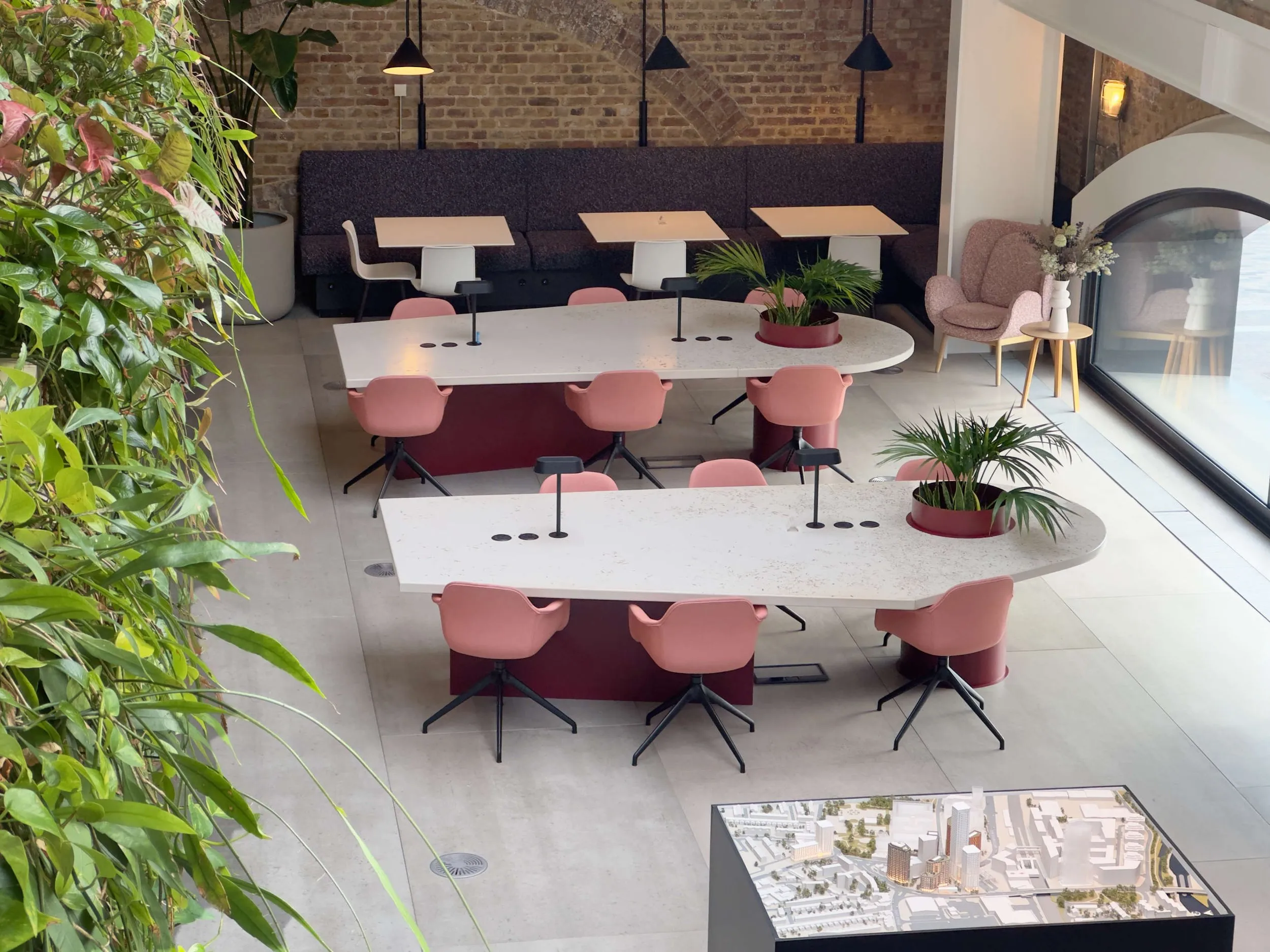
Every office refresh produces a skip — or several. Desks that are structurally fine get scrapped because they're the wrong size, storage gets binned because it doesn't match the new scheme, and a surprising amount of it is barely a few years old. Most of that waste is avoidable. This guide is a practical look at how to cut furniture waste in a fit-out or refurb without pretending it's easy, and without the greenwash.
Why office furniture waste is worth tackling
Commercial furniture is bulky, heavy and made from materials that take real energy to produce — steel frames, particleboard, foam, laminate. When a company moves or rebrands, a lot of it goes to landfill or low-grade recycling simply because nobody costed the alternative. The embodied carbon in a desk you already own has already been spent; throwing it out and buying new means paying that cost twice.
The honest framing is this: the greenest piece of furniture is usually the one you already have. Reuse beats recycling, and recycling beats replacement. That's not a slogan, it's a hierarchy you can actually plan a fit-out around, and it tends to save money as well as carbon. The catch is that reuse takes a bit more thought up front than ordering new from a catalogue — which is exactly what this guide is for.
The waste hierarchy, applied to furniture
The familiar waste hierarchy translates neatly to a fit-out. In rough order of preference:
- Reuse — keep using the piece as-is, or relocate it. No new material, no manufacturing, lowest cost. Worth doing wherever the item still suits the role.
- Rework — adapt what you own so it fits the new layout or brand: resize a desk, re-top a frame, repaint or re-shroud storage, reconfigure a run. The structure stays; only the parts that no longer work get changed.
- Recycle — when an item genuinely can't be reused or reworked, separate the materials so steel, timber and board go back into the stream rather than to landfill.
- Replace — buy new only for what's actually missing, and choose pieces designed to last and adapt.
Most real projects use all four. The skill is pushing as much as possible up the ladder — turning "replace" decisions into "rework" ones, and "recycle" into "reuse" — rather than defaulting to new because it's the path of least resistance.
What can actually be reworked instead of binned
Plenty more than people assume. Reworking and resizing existing furniture is some of our favourite work, and it's often quicker than making from scratch because the hard part — the structure — already exists. Common interventions:
- Resizing desks — cutting tops down or making them larger to suit a new spacing or a tighter floorplate, often when a company moves into a different building.
- Re-topping frames — keeping sound desk and table legs but fitting a new surface in a fresh finish or brand colour.
- Adapting storage — re-fronting lockers, adding shrouds, or rebuilding a credenza to a new footprint rather than scrapping the carcass.
- Refinishing — powder-coating steel in a new RAL colour, repainting or re-veneering so old and new sit together.
- Reconfiguring runs — splitting or joining bench desks to match a changed headcount.
Not everything is worth saving — water-damaged board or a bent frame may genuinely be past it — and a good maker will tell you when reworking costs more than it's worth. But the default should be to ask the question, not assume the skip.
Designing furniture so it lasts and adapts
The longest-lived furniture is designed to change. If a piece can be taken apart, resized and reconfigured, it survives the next office move instead of being written off. A few principles make that possible:
- Design for disassembly — mechanical fixings (bolts, brackets, knock-down fittings) rather than glue and permanent welds, so components come apart cleanly for repair, resizing or reuse.
- Standard, replaceable parts — a damaged top or a single worn component can be swapped without scrapping the whole unit.
- Separable materials — keeping steel, timber and board distinct so that, at genuine end of life, they can actually be recycled rather than landfilled as a composite.
- Neutral structure, swappable surface — a sound frame can carry a new top and a new finish through several refreshes, which is the whole idea behind reworking.
This is the thinking behind clip-together and modular systems generally: furniture that's meant to be reconfigured, not consumed. If you're specifying new pieces, asking "what happens to this in five years?" is one of the most useful sustainability questions you can put to a supplier.
UK manufacture, shorter supply chains and honest materials
Where and how furniture is made matters too. Designing in London and manufacturing through a vetted UK network keeps the supply chain short: less freight, fewer shipping miles, and tighter oversight of how things are built — which you can read more about on our about page. Shorter chains also make reuse and rework practical, because adapting existing furniture needs a workshop you can actually get to, not a container ship.
On materials, the honest position is that no commercial furniture is impact-free, so the goal is sensible choices rather than perfect ones. Steel is genuinely useful here: it's strong, long-lived and highly recyclable, so a powder-coated steel frame can be refinished and reused for years and still be recycled at the end. Responsibly sourced timber, recycled-content board and durable finishes that wear well all help — and durability is itself a sustainability feature, because the longest-lasting piece is the one that never needs replacing. Be wary of any supplier leaning hard on a single eco-buzzword; ask what a claim actually means in practice.
How to brief a maker for a lower-waste outcome
You don't need a sustainability strategy to get a better result — you need to put reuse on the table from the start. A few things to include in your brief:
- List what you already own. Photos and rough dimensions of existing desks, tables and storage let a maker tell you what can be reworked before anything new is specified.
- Say reuse is a priority. If you don't ask, you'll usually be quoted all-new because it's simpler to price. Make clear you want the reuse-and-rework option costed alongside it.
- Flag the constraints. New layout, brand colours, deadline and budget — these shape what's worth adapting versus replacing.
- Ask about end of life. For anything new, ask whether it can be disassembled, resized and recycled later.
- Plan the clearance. Agree what happens to anything that genuinely can't be kept, so it's recycled or rehomed rather than skipped by default.
Doing this early, ideally alongside your wider office refurbishment furniture planning, is what turns good intentions into a fit-out that actually wastes less.
Frequently asked questions
Often, yes — though it depends on condition and scope. The structure already exists, so resizing a desk or re-topping a frame avoids the cost and lead time of building from scratch. Heavily damaged items can cost more to salvage than replace, which is why an honest assessment matters. As rough guidance, reworking is frequently the better-value route, but the only reliable answer comes from a quick look at what you have.
Items with compromised structure — water-damaged board, bent or corroded frames, broken mechanisms beyond economic repair — are usually past reworking, as are pieces made from bonded composites that can't be separated. Even then, the aim is to recycle the materials properly rather than landfill them. A good maker will tell you honestly when an item isn't worth saving instead of charging you to rescue it.
No. New furniture is sometimes the right call — for missing items or where nothing existing fits. The sustainable move is choosing pieces designed to last and adapt: mechanical fixings so they come apart, replaceable parts, recyclable materials like steel, and finishes that wear well. Durability and design for disassembly mean a new piece can be reworked and reused for years rather than scrapped at the next refresh.
Shorter supply chains mean less freight and shipping, and closer oversight of how furniture is built. Just as importantly, a UK workshop makes reuse and rework practical — adapting existing furniture needs a maker you can reach, not an overseas factory. Designing in London and manufacturing through a vetted UK network keeps both new builds and reworking accessible, which is what makes the lower-waste options realistic rather than aspirational.
As early as possible — ideally before anything is ordered. Once new furniture is specced and old stock is earmarked for the skip, the cheap, low-waste options have usually been designed out. Listing what you own and asking for reuse and rework to be costed at the briefing stage is what keeps those choices open and turns waste reduction into a practical plan rather than an afterthought.