
Breakout Tables for London Offices: Bespoke vs Off-the-Shelf
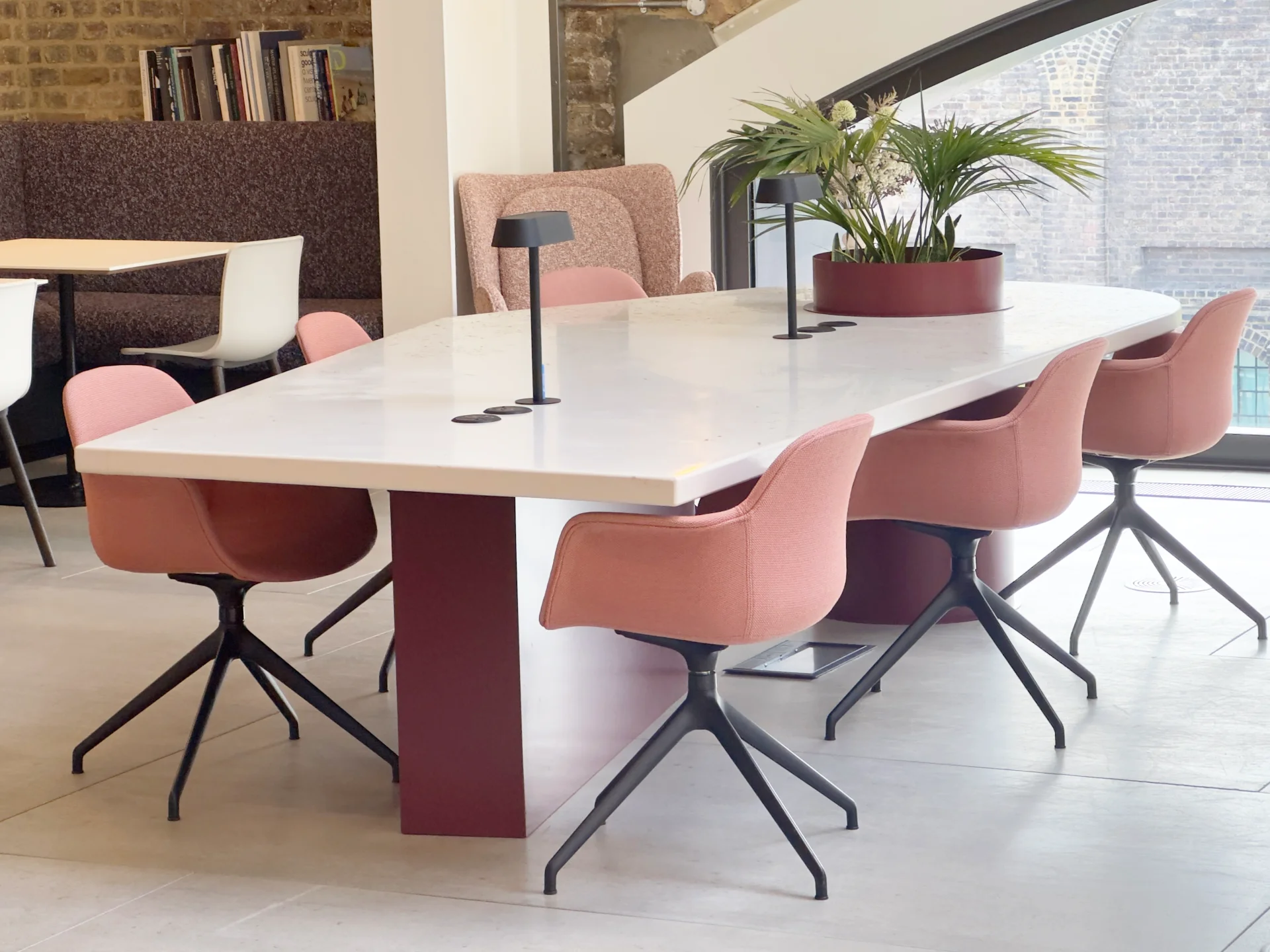
The breakout table is one of the hardest-working pieces in a modern office. It hosts stand-up catch-ups, laptop work, lunch, the occasional all-hands and the casual conversations that don't fit in a meeting room. Get it right and a corner of dead floor becomes the busiest spot in the building. This guide weighs up off-the-shelf breakout tables against a bespoke approach, so you can choose well for your space, your headcount and your budget.
What makes a good breakout table
Before comparing routes to buy one, it helps to know what "good" looks like. A breakout table earns its place when it gets a handful of fundamentals right:
- Size and shape for the space and the headcount. A long bench suits a perimeter wall and rolling perch-and-go use; a round or oval top is friendlier for face-to-face conversation; a cluster of smaller tables flexes for different group sizes. Allow roughly 600mm of width per person seated, and leave circulation space so people aren't squeezing past chairs.
- The right height. Standard seated dining/desk height (around 720–740mm) suits most breakout settings. Poseur or counter height (around 1000–1100mm) encourages short, energetic stand-up sessions and pairs well with high stools — but it isn't comfortable for a full hour, so match the height to how the table will really be used.
- Power and data where people need it. Laptops and phones don't charge themselves. Recessed sockets, grommets, pop-up modules or under-table cable trays turn a nice table into a usable one. This is one of the most common reasons a stock table disappoints — the power was an afterthought.
- Durable, wipeable surfaces. Breakout tables take coffee rings, hot mugs, keyboards and the odd lunch. Hard-wearing laminates, Fenix and solid timber with a robust finish hold up far better than delicate veneers in a high-traffic setting.
- Optional biophilic and acoustic touches. A central planter softens a hard surface and brings greenery into the floorplate; nearby acoustic panels or planters help tame the noise that breakout zones inevitably generate.
When off-the-shelf is the sensible choice
A ready-made breakout table is often exactly the right call. Reach for off-the-shelf when:
- the space is straightforward — a regular rectangle or alcove that standard sizes fit comfortably;
- you need it quickly and can't wait on a design-and-make lead time;
- you want a known, repeatable product you can order more of later;
- the budget is tight and a catalogue size does the job without compromise.
If a stock table fits your floorplan and your finishes, there's no virtue in over-complicating it. As a ready-made example, the Orbital biophilic table is a circular meeting and breakout table with a central planter, solid oak legs, optional power integration and customisable finishes — a good fit where you want the biophilic look without a fully bespoke commission.
When bespoke wins
Bespoke breakout tables earn their keep when a catalogue size would either waste the space or compromise the brief. The usual triggers:
- Odd or awkward spaces. A tapering atrium, a column in the middle of the floor, a sloping soffit, a width that falls between two standard sizes — bespoke is designed around the constraint instead of fighting it.
- A specific finish or brand look. When the table needs to match a brand colour, a reception desk or an existing material palette, a bespoke table can be made to a paint reference or RAL colour rather than the nearest catalogue approximation.
- Integrated power and planting done properly. If you want sockets in exactly the right places, cable routing that stays hidden, or a planter sized and positioned to suit the room, designing it in from the start beats bolting accessories onto a stock top.
- Reusing frames you already own. More on this below — it's often the most cost-effective and sustainable route of all.
- A centrepiece moment. In a client-facing breakout or town-hall space where the table sets the tone, the look matters enough to justify making it properly.
A good maker will tell you honestly when a stock product would serve you better. Plenty of projects end up as a sensible mix: ready-made tables in the simple zones, one or two bespoke pieces where the space or the brief demands it.
Materials and finishes
The surface defines both the look and the lifespan of a breakout table. Common choices include:
- Laminate and MFC — cost-effective, available in dozens of woodgrains and solid colours, and genuinely hard-wearing for everyday use.
- Fenix — a soft-touch, matt surface that resists fingerprints and minor scratches, popular for a contemporary, low-sheen finish.
- Solid timber and real-wood veneer — warm and premium, best sealed with a tough lacquer or oil if it's going somewhere busy.
- Powder-coated steel for legs and frames, available in any RAL colour to match or contrast with the top.
- Painted finishes matched to a brand or a specific paint reference for true colour control.
If the surface you want isn't on a standard list, that's precisely the kind of thing a bespoke route is built to handle.
Reworking existing frames into breakout tables
One of the most overlooked options is not buying a new table at all. When companies move, downsize or refresh, they often have perfectly good desk frames and bases sitting idle. Those structures can frequently be re-topped, resized and reconfigured into breakout and collaboration tables — a long run of redundant bench desks, for instance, can become a poseur table or a series of breakout pods.
The benefits are practical: reusing the structure is usually quicker and cheaper than making new, because the hardest part already exists, and it keeps serviceable furniture out of landfill. It's also a tidy way to keep a consistent look across a refurbished floor. If you have frames you're tempted to skip, it's worth asking what they could become before they go.
For the bigger picture on commissioning made-to-order pieces — process, realistic lead times and how to write a brief — see our guide to bespoke office furniture in London.
Frequently asked questions
It depends on headcount and the space around it. Allow roughly 600mm of width per person and leave clear circulation so chairs and stools don't block walkways. For stand-up use a smaller poseur table works hard; for seated collaboration, size up. If the room is awkward, a bespoke size avoids the wasted space a standard table leaves behind.
Yes. Recessed sockets, pop-up power modules, grommets and under-table cable trays can all be built in. Off-the-shelf tables sometimes offer power as an add-on, but if you want sockets in specific positions with cabling fully concealed, designing it in from the start — typically via a bespoke build — gives the cleanest result.
Hard-wearing laminates, MFC and Fenix cope best with mugs, laptops and daily wipe-downs, and they're available in a wide range of looks. Solid timber and veneer are lovely but want a tough sealed finish to survive heavy traffic. Match the surface to how hard the table will be used rather than to the showroom photo.
Both — it works well in either setting. The Orbital is a circular table with a central planter, solid oak legs, optional power integration and customisable finishes, which makes it equally at home as a biophilic breakout centrepiece or a smaller collaborative meeting table. You can see the full specification on the Orbital page.
Often, yes. Existing desk frames and bases can frequently be re-topped, resized and reconfigured into breakout and poseur tables. It tends to be quicker and cheaper than making new because the structure is already there, and it keeps usable furniture out of landfill — a common request when companies move or refurbish.
A straightforward bespoke table typically takes a few weeks from design sign-off, with larger or more complex pieces taking longer. Reworking existing frames is often faster than making new, because the structure already exists. The honest answer depends on scope, so a short conversation about your space and deadline gives the most realistic timeline.