
Bespoke Office Furniture in London: A Practical Buyer's Guide
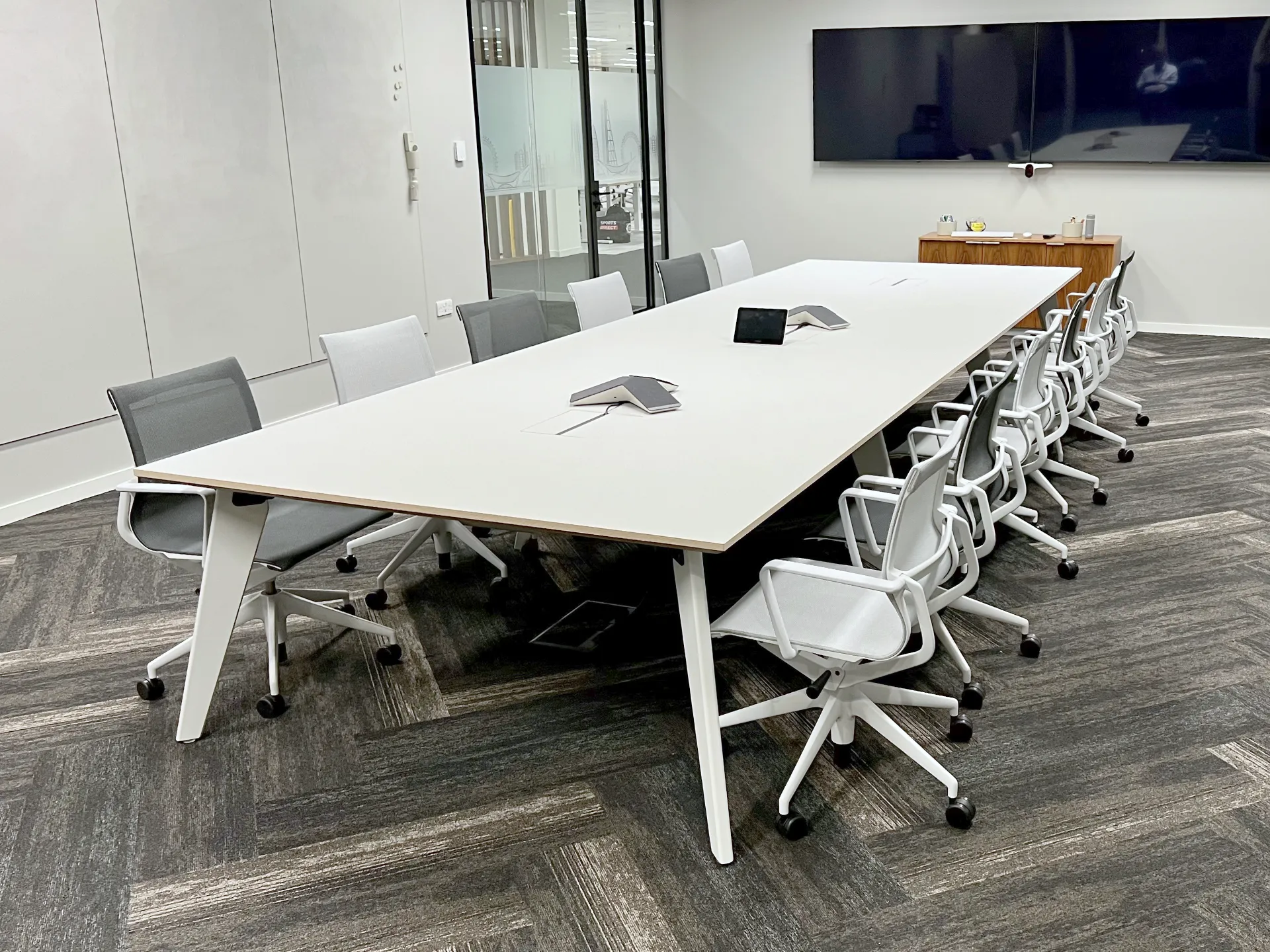
Off-the-shelf furniture is designed for an average room that doesn't exist. Bespoke furniture is designed for your room — the awkward alcove, the column in the middle of the floor, the brand colour that has to be exact, the desks you already own and don't want to throw away. This guide explains how commissioning bespoke office furniture in London actually works, so you can decide whether it's right for your project and brief it well.
What counts as "bespoke" office furniture
Bespoke means designed and made to your specification rather than picked from a catalogue. In practice it covers a wide range:
- One-off tables — boardroom, meeting and breakout tables in a size, shape and finish that suit the space.
- Fitted and freestanding storage — joinery, lockers, credenzas and shrouds built to the exact footprint.
- Reworking what you already own — resizing desks, re-topping frames, or adapting existing units when you move or refurbish.
- Custom components — brackets, planters, cable management and parts designed to solve a specific problem.
The common thread is that the design starts from your constraints, not from a stock SKU.
When bespoke makes sense (and when it doesn't)
Bespoke isn't always the answer. If you need forty identical desks quickly, a ready-made range is usually faster and cheaper. Bespoke earns its place when:
- the space is non-standard and standard sizes waste it;
- the piece is a centrepiece (a boardroom table, a reception desk) where the look matters;
- you want to reuse existing furniture rather than send it to landfill;
- you need a specific finish, brand colour or material that catalogues don't offer.
A good maker will tell you honestly when an off-the-shelf product would serve you better — and many projects end up as a sensible mix of the two.
How the process works
Most bespoke projects follow the same path from idea to installation:
- Scope — we talk through what you need, measure the space, and agree the constraints (budget, deadline, finishes).
- Design — concept sketches and technical drawings, refined until the detail is right.
- Visualisation — a realistic 3D render so you can approve the look before anything is made.
- Manufacture — built by a vetted UK network to the signed-off drawings.
- Delivery & installation — delivered and installed, with the old stuff cleared if you need it.
Clear milestones at each stage mean no surprises — you sign off the design before manufacture begins.
Materials and finishes
The finish is where a bespoke piece earns its keep. Typical options include real-wood veneers and solid timber, melamine-faced board (MFC) in dozens of woodgrains and solids, Fenix and laminate surfaces, powder-coated steel in any RAL colour, and painted finishes matched to a brand or a paint reference. If you have a material in mind that isn't on a standard list, that's exactly the kind of thing bespoke exists to do.
Lead times and cost
Two honest answers, because they're the questions everyone has.
Lead time. A straightforward bespoke piece typically takes a few weeks from sign-off; larger or more complex projects take longer. Reworking existing furniture is often quicker than making new, because the structure already exists.
Cost. It depends entirely on scope, so be wary of anyone who quotes a firm price before seeing the brief. As rough guidance, a one-off table generally starts in the low four figures, fitted storage depends on run length, and a full fit-out is a project-by-project number. The fastest way to a real figure is a short conversation about what you need.
How to write a good brief
You don't need technical drawings to start — but a few details make the first quote far more accurate:
- The space — rough dimensions, and a photo if you have one.
- The job — what the piece is for and how many people use it.
- Constraints — deadline, budget range, and any finish or brand requirements.
- Existing furniture — what you already have that could be reused or matched.
Send those over and you'll get a useful answer quickly. If you're not sure yet, that's fine too — describing the problem is often enough for us to suggest an approach.
Frequently asked questions
It depends on scope, so treat any figure quoted before a brief with caution. As a rough guide, one-off tables generally start in the low four figures and fitted storage is priced by run length and finish. The quickest route to an accurate number is a short conversation — tell us what you need and we'll come back with a realistic range.
A straightforward piece typically takes a few weeks from design sign-off, with larger or more complex projects taking longer. Reworking existing furniture is often faster than making new because the structure is already there.
Yes — this is some of our favourite work. Resizing desks, re-topping existing frames and adapting storage are common when companies move or refurbish, and reusing what you have is cheaper and far better for the environment than buying new.
Both. We work directly with businesses and also support dealers, designers and resellers on custom and white-label projects.
Yes. We design in London and manufacture through a vetted UK network, and we deliver and install across London and the wider UK.