Working with REFRAME: A Guide for Dealers, Designers and Resellers
If you specify, supply or install office furniture for a living — as a dealer, fit-out contractor, interior designer or reseller — you already know the hard part isn't the catalogue items. It's the one-off boardroom table, the storage that has to fit a real building, or the client who wants a finish nobody stocks. This guide explains how REFRAME works as a trade partner: a London design-and-build studio you can put behind your own brand, with the drawings, renders and UK manufacturing to back it up.
What REFRAME offers the trade
We design and make bespoke office furniture, and we supply it on a white-label basis so it sits comfortably under your brand and your client relationship. For partners that means:
- Bespoke design and manufacture — one-off tables, fitted and freestanding storage, lockers and shrouds, breakout tables, planters and custom components, designed in London and made through a vetted UK network.
- White-label / unbranded supply — no REFRAME logo on the piece, the paperwork or the delivery unless you want it there. Your client sees your name.
- Reworking and resizing — re-topping frames, resizing desks, adapting existing units when a client moves or refreshes, so you can offer a credible reuse option instead of sending serviceable furniture to landfill.
- 3D visualisation for sign-off — realistic renders you can put in front of a client to win the decision and lock the spec before anything is cut.
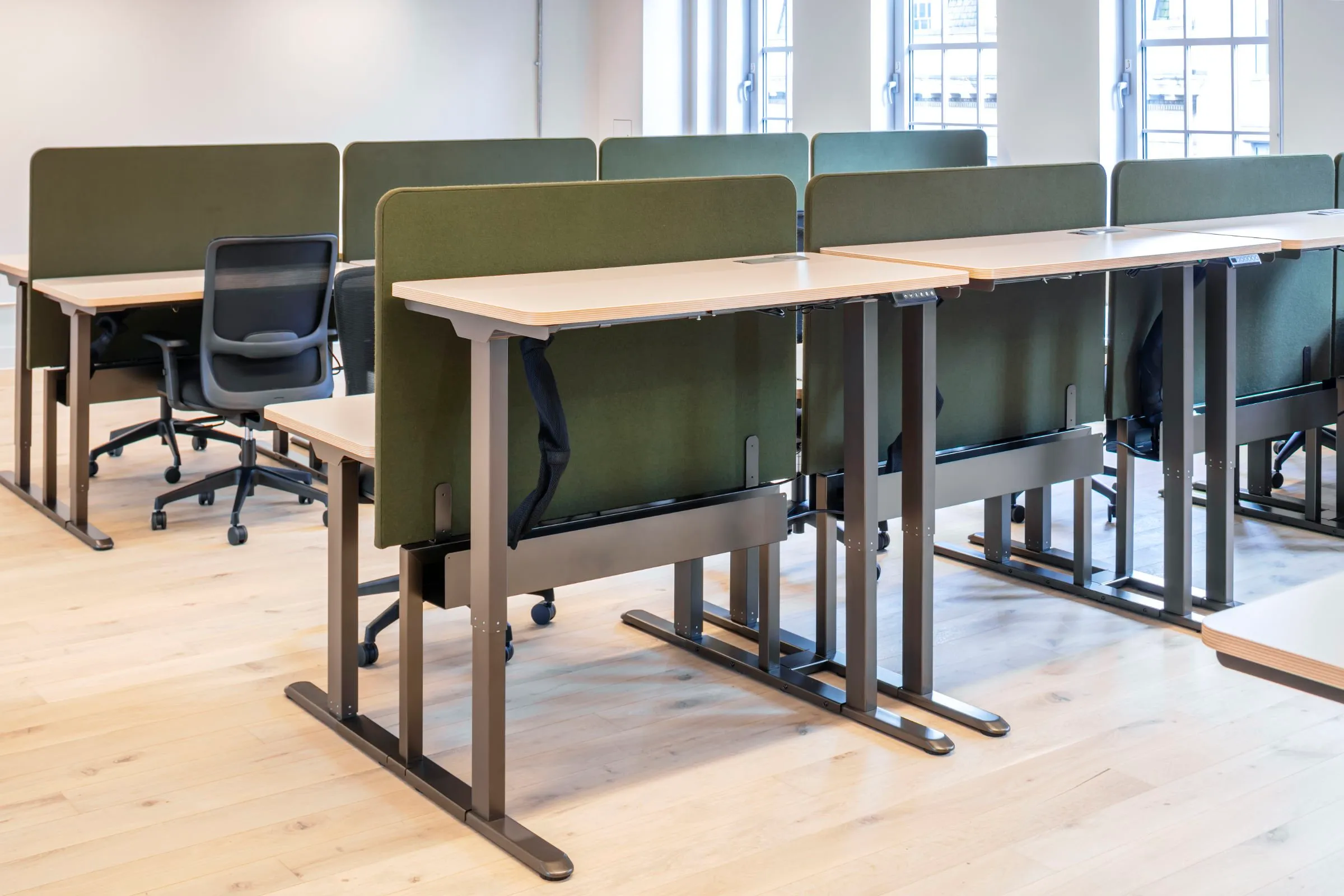
- A ready-made range when it fits — our standard products (the HAL mobile lectern, Orbital biophilic table, Recon clip-together desks and R!se sit-stand desks) are there when an off-the-shelf answer is faster and cheaper than bespoke.
The point of a trade relationship is that you get a single, accountable partner for custom design and build — drawing, making and installing — rather than juggling a separate designer, fabricator and fitter and hoping they agree with each other.
Typical project types we support
Most trade enquiries fall into a handful of recognisable buckets:
- Centrepiece tables — boardroom, meeting and reception tables in a size, shape and finish the catalogue can't match.
- Fitted and bespoke storage — joinery runs, credenzas, lockers and tea-point units built to an exact footprint, including awkward alcoves and columns.
- Lockers and shrouds — agile-working storage and tidy shrouds to hide cabling, services or mismatched bases.
- Breakout and ancillary — soft-seating tables, poseur tables, planters and the bits that make a scheme feel finished.
- Reworking existing furniture — the move-and-refurbish job where the client wants their current desks resized or re-topped rather than replaced.
- Custom components — brackets, cable management, infills and one-off parts that solve a specific problem on site.
If you have a line item on a fit-out that "doesn't quite exist yet", that's usually our part of the job.
How the collaboration works
The process is deliberately the same whether the end client is yours or ours, so you always know what happens next:
- Brief — you send us the requirement: drawings, a sketch, photos of the space, or just a description and the constraints (budget, deadline, finishes, brand colours). A quick call is often enough to scope it.
- Drawings — we produce technical drawings and refine the detail with you until it's right and buildable.
- Render — a realistic 3D visualisation so you, or your client, can approve the look before manufacture. This is the step that prevents expensive misunderstandings.
- Manufacture — built to the signed-off drawings through our vetted UK network, with finishes matched to the agreed spec.
- Delivery and install — delivered and installed across London and the UK, unbranded, with old furniture cleared if that's part of the job.
You decide how visible we are. Some partners want us purely as a back-of-house maker and handle the client themselves; others bring us in to support a meeting because a designer in the room helps close the spec. Both work.
White-label supply, in practice
"White label" should mean more than leaving a logo off. For our trade partners it means:
- Unbranded deliverables — drawings and renders you can present as your own, and a finished product with no maker's marks unless requested.
- You own the client relationship — pricing, margin and communication with the end user stay with you; we support behind the line.
- Consistent finishes — real-wood veneers and solid timber, MFC in a wide range of woodgrains and solids, Fenix and laminate, powder-coated steel in any RAL, and painted finishes matched to a brand reference, so a bespoke piece sits alongside the rest of your scheme rather than fighting it.
- Flexibility on volume — genuine one-offs through to small batches; if you need forty identical desks fast, we'll tell you honestly when a ready-made route serves you better.
UK lead times and what drives them
Two honest answers, because they're the questions every project hangs on.
Lead time. A straightforward bespoke piece typically takes a few weeks from sign-off; larger or more complex jobs take longer. Reworking existing furniture is often quicker than making new, because the structure is already there. UK manufacture keeps the supply chain short and predictable, which matters when you're committing to a fit-out programme.
Cost. It depends entirely on scope, so be wary of anyone quoting a firm price before seeing the brief. As rough guidance, a one-off table generally starts in the low four figures, fitted storage depends on run length, and reworking is priced job by job. Send the requirement and we'll come back with a real number rather than a placeholder.
Why a design-and-build partner reduces risk
On bespoke, the risk lives in the gaps — between the designer's intent, the fabricator's interpretation and the fitter's reality on site. A combined design-and-build partner closes those gaps:
- One point of accountability. If a dimension is wrong, there's no argument about whose drawing it was — it's ours to fix.
- Buildability checked early. Because the people drawing it also make it, design choices are pressure-tested for manufacture before you commit a client.
- Sign-off you can stand behind. The render and the signed drawings mean your client approves the look before money is spent, protecting your margin and your reputation.
- Predictable UK delivery. Short supply chains and install across London and the UK reduce the surprises that derail programmes.
The result is a partner you can quote against confidently and put in front of demanding clients without worrying about what arrives on delivery day. To talk through a live project or set up a trade relationship, start a conversation with the brief you already have.
Frequently asked questions
Yes. We supply unbranded by default for trade partners — no REFRAME marks on the product, drawings, renders or paperwork unless you ask for them. You keep the client relationship, the pricing and the margin; we work behind the line as your design-and-build resource.
Both. If you send dimensioned drawings we'll work to them and flag anything that won't build cleanly. If you only have a sketch, photos or a description, we'll take it through concept and technical drawings to a render you can sign off. You choose how much of the design you keep in-house.
Only if you want us to. Many partners keep us entirely back-of-house; others bring us into a meeting because having the maker in the room helps lock the specification. We follow your lead on visibility and never go around you.
A straightforward bespoke piece is usually a few weeks from sign-off, with larger or more complex jobs taking longer. Reworking existing furniture is often quicker than making new. Because everything is manufactured in the UK, lead times stay predictable — useful when you're committing to a fit-out programme.
Yes, and most projects are a sensible mix. We'll make the one-off centrepieces and fitted storage, and steer you to our ready-made range where an off-the-shelf product is faster and cheaper. A combined order keeps finishes consistent and the supply chain simple.
Send the brief — drawings, a sketch, or just a description with the constraints — via our contact page. We'll review scope and come back with a real figure rather than a placeholder. We don't quote firm prices before seeing the requirement, because on bespoke that number is rarely honest.